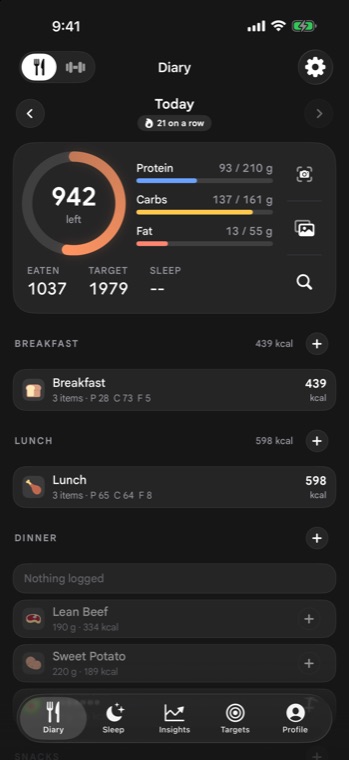
In the science of physique transformation and athletic performance, energy balance remains governed by the first law of thermodynamics: calories consumed versus calories expended. Yet, millions of dedicated fitness enthusiasts find themselves stuck in perplexing fat loss plateaus despite swearing they consume only 1,800 calories per day. When frustrated lifters say, “My metabolism must be broken because I cannot lose weight on a deficit,” clinical metabolic chamber studies consistently demonstrate that human metabolism is rarely the culprit. Instead, the discrepancy almost always lies in Food Logging Inaccuracy. From deceptive food manufacturing labeling tolerances to crowdsourced database corruptions and volume-measuring errors, the modern nutritional environment is filled with hidden calories. By deploying high-precision barcode scanning, optical character recognition (OCR), and verified nutritional databases with an advanced food tracker, lifters can eliminate the guesswork and take absolute control of their caloric intake.
In this comprehensive analytical guide, we expose the legal 20% FDA nutrition label margin of error, examine the pitfalls of crowdsourced user databases, contrast raw versus cooked weight discrepancies, dissect liquid calorie blind spots, and outline a 4-phase precision logging protocol to harmonize with your progressive overload in your workout tracker.
1. The FDA 20% Rule: The Legal Illusion of Nutrition Facts
The first major shock for most calorie counters is discovering that the “Nutrition Facts” panel printed on food packaging is not an exact chemical analysis of the specific item in their hands. Under Title 21 of the Code of Federal Regulations (21 CFR 101.9), the United States Food and Drug Administration (FDA) grants food manufacturers a substantial margin of error:
- Class II Nutrients (Vitamins, Minerals, Protein, Total Carbohydrates): The actual nutrient content in the food must be at least 80% of the value declared on the label. This means a product claiming 20 grams of protein could legally contain only 16 grams.
- Calories, Total Fat, Saturated Fat, Cholesterol, Sodium, and Sugars: The actual content must not exceed 120% of the value declared on the label!
Consider the profound real-world consequences of this legal allowance. A pre-packaged meal labeled as containing 500 calories can legally contain up to 600 calories without violating FDA regulations. If you consume four packaged meals a day, that 20% allowable variance can introduce an unmeasured 400 surplus calories per day: an amount large enough to completely erase your planned weekly fat loss deficit without your knowledge.
2. Crowdsourced Database Corruption: The User-Generated Data Disaster
The second primary source of food tracking failure stems from the reliance on legacy fitness apps with unmoderated, crowdsourced nutritional databases. When an app allows any user to manually submit food items, the database rapidly deteriorates into a chaotic collection of erroneous, incomplete, and wishful entries:
- Wishful Thinking Entries: A user types “Large Chocolate Chip Cookie” and manually inputs “100 calories, 15g protein” because they feel guilty about eating it. That corrupt entry is then saved to the global cloud, where thousands of other users innocently log it, severely under-counting their actual caloric intake.
- Missing Micronutrients and Fiber: Millions of crowdsourced entries list calories and protein while leaving carbohydrates, dietary fiber, saturated fats, and sodium blank. This corrupts your macronutrient ratios and destroys nutritional analytics.
- Ambiguous Serving Sizes: Entries labeled as “1 bowl,” “1 slice,” or “1 piece” provide zero objective mass measurement. A slice of artisanal sourdough bread can weigh anywhere from 35 grams to 95 grams, representing a 150% variance in carbohydrate content.
To eliminate this hazard, modern athletes rely on verified databases curated directly from laboratory-tested sources like the USDA FoodData Central and the Nutrition Coordinating Center Food and Nutrient Database (NCCDB), where every single food entry is analytically validated across dozens of micro and macronutrients.
3. Comparison Table: Common Food Logging Errors and Real Caloric Impacts
The following table illustrates how seemingly innocent daily logging inaccuracies compound into massive hidden caloric surpluses:
| Food Item & Logging Method | Logged Amount | Actual Ingested Mass | Logged vs. Actual Calories | Net Caloric Error |
|---|---|---|---|---|
| Peanut Butter (Volume Spoon vs. Scale) | 2 Level Tbsp (32g) | 2 Heaped Tbsp (58g) | 190 kcal vs. 345 kcal | +155 kcal (Unmeasured fat) |
| Chicken Breast (Cooked weighed as Raw) | 200g Raw (Logged) | 200g Cooked (Cooked down from 275g raw) | 220 kcal vs. 310 kcal | +90 kcal (Water loss error) |
| Olive Oil (Free Pouring in Skillet) | 1 Tsp “Drizzle” (5g) | Actual Free Pour (18g) | 40 kcal vs. 158 kcal | +118 kcal (Pure dietary fat) |
| White Jasmine Rice (Cooked vs. Raw) | 150g Cooked (Logged as Raw) | 150g Raw (Yields ~420g cooked) | 540 kcal vs. 195 kcal | -345 kcal (Severe under-eating error) |
| Salad Dressing (Commercial Caesar) | 2 Tbsp (30ml) | Actual Restaurant Pour (65ml) | 140 kcal vs. 310 kcal | +170 kcal (Hidden emulsified oils) |
4. The Raw vs. Cooked Paradox: Water Weight Physics
One of the most persistent sources of tracking confusion is failing to distinguish between raw and cooked weights. Water contains zero calories, but water content dramatically dictates the mass and caloric density of food:
1. Meats and Proteins (Moisture Evaporation)
When you cook raw chicken breast, ground beef, or fish, water evaporates from the muscle fibers. A 100-gram raw chicken breast contains approximately 110 calories and 23 grams of protein. After cooking on a grill, that chicken breast shrinks to approximately 75 grams due to water loss. If you weigh 100 grams of cooked chicken and log it using a “raw chicken breast” database entry, you are consuming 33% more meat and calories than you recorded!
2. Starches and Grains (Water Absorption)
Grains, rice, pasta, and oats undergo the exact opposite transformation: they absorb massive amounts of cooking water. 100 grams of raw white rice contains roughly 360 calories and expands into approximately 280 grams of cooked rice. If you cook 100 grams of raw rice and log it as “100 grams cooked rice,” you have recorded only 130 calories while consuming 360 calories: an enormous 230-calorie under-reporting.
The universal golden rule of precision sports nutrition is simple: Always weigh food in its raw, uncooked state whenever possible, or ensure that you specifically select verified “cooked” database entries when dining out or eating pre-prepared meals.
5. Step-by-Step Protocol: The 4-Phase Precision Logging Method
To eliminate caloric estimation errors and bring scientific precision to your daily nutrition, deploy this 4-phase tracking protocol:
Phase 1: High-Speed Barcode Scanning with Live OCR Fallback
Whenever you purchase packaged foods, open your food tracker and scan the UPC barcode. The app instantly cross-references the code against verified global databases. If the barcode is unlisted or customized, point your camera at the Nutrition Facts panel: on-device Optical Character Recognition (OCR) extracts calories, protein, carbohydrates, fats, and fiber in milliseconds, preventing manual typing errors.
Phase 2: Digital Gram Scale Standardization
Banish measuring cups, volume spoons, and visual estimates from your kitchen for all energy-dense foods. Place your bowl on a digital gram scale, hit the tare button to zero the scale, and measure everything in grams. A gram is an absolute international unit of mass; a “tablespoon” of peanut butter or oil is a subjective guess that varies by 100% depending on the curvature of the utensil.
Phase 3: The Cooking Oil and Condiment Audit
Cooking fats are the silent assassin of fat loss diets. Each gram of oil contains 9 calories. A single generous free pour of olive oil into a frying pan easily adds 15 to 25 grams of unmeasured fat (135 to 225 calories). Either weigh your cooking oil bottle before and after pouring (reverse tare method), or utilize zero-calorie aerosol propellant sprays when searing proteins.
Phase 4: Weekly Trend Averaging and Energy Bank Reconciliation
Do not panic over minor daily weight fluctuations caused by water retention or sodium shifts. Instead, compare your 7-day average body weight against your 7-day average caloric intake in your app. If your scale weight remains completely unchanged over two weeks while your target shows a 500-calorie deficit, your actual intake is matching your maintenance: tighten your logging precision or adjust your caloric target downward by 200 calories.
6. Liquid Calories and Hidden Emulsifiers
Beverages represent the largest unrecorded calorie source in modern diets. Liquid calories fail to activate stretch receptors in the stomach or trigger significant satiety hormones (CCK and PYY), making them extraordinarily easy to over-consume without feeling full:
- Specialty Coffee Drinks: A morning latte made with whole milk, flavored syrups, and whipped cream can easily contain 350 to 500 calories: equivalent to a complete chicken, rice, and vegetable meal.
- Fruit Juices and Smoothies: Juicing removes the insoluble plant fiber matrix, concentrating free fructose into a rapidly absorbed liquid that spikes insulin and delivers 120 calories per cup without promoting fullness.
- Alcoholic Mixers: Beyond the 7 calories per gram contained in pure ethanol, sweet tonic waters, syrups, and cocktail mixers deliver massive loads of refined sugar.
7. Integrating Nutrition Tracking with Wearable Telemetry
Precision food logging is only one half of the energy balance equation; the other half is total daily energy expenditure (TDEE). By synchronizing your food tracker with your smartwatch (Apple Watch or Wear OS), your active workout calorie burn from your workout tracker and continuous Non-Exercise Activity Thermogenesis (NEAT) are automatically reconciled.
This dynamic feedback loop ensures that on high-activity days your caloric targets expand to protect recovery, while on low-activity days your targets contract, keeping your net energy balance locked on your target goal.
7b. Psychophysiological Benefits of Objective Logging
One of the greatest psychological benefits of objective food logging is eliminating dietary guilt. When an athlete relies on vague food rules (“clean eating” vs. “dirty food”), eating a single cookie or piece of pizza induces profound anxiety and often triggers an all-out binge. By tracking macros objectively in a verified macro tracker, you realize that foods are simply combinations of carbon, hydrogen, and oxygen. As long as your micronutrient and protein foundations are met, including a flexible treat within your daily caloric target produces zero negative impact on body composition.
7c. Restaurant Dining and Social Navigation Protocol
Dining at restaurants presents a significant tracking challenge because commercial chefs prioritize taste above all else, heavily utilizing butter, cream, and oils. When eating out, deploy the “Rule of 1.25”: search for a standard chain-restaurant equivalent in your verified database, and multiply the fat content by 1.25 to account for unseen kitchen oils. Opt for grilled proteins, request sauces on the side, and choose steamed vegetables or plain baked potatoes to retain maximum caloric control.
7d. Sodium-Induced Fluid Retention vs. Adipose Gain
One of the most emotionally distressing experiences for dieters is waking up to see the scale jump by 3 or 4 pounds overnight after eating a high-sodium restaurant meal. Because dieters assume the scale reflects fat tissue, many panic and slash calories further.
In reality, gaining a single pound of adipose tissue requires a caloric surplus of approximately 3,500 kcal. A sudden overnight weight spike is almost purely extracellular water retention. Sodium draws water into the interstitial fluid compartments to maintain osmotic equilibrium (approximately 1 gram of sodium binds 1 liter of water, equal to 2.2 pounds). Tracking your sodium intake alongside your macros in your food tracker allows you to understand these transient fluid shifts with calm, objective detachment.
8. Frequently Asked Questions
Do I need to weigh vegetables like lettuce and cucumbers?
Non-starchy fibrous vegetables (spinach, romaine, cucumbers, celery) are over 95% water and contain negligible calories. Weighing leafy greens is unnecessary and can create tracking fatigue. Focus your precision weighing on energy-dense foods: proteins, fats, oils, nuts, grains, and starches.
Is scanning barcodes faster than manual searching?
Yes. Barcode scanning takes less than two seconds and eliminates the risk of choosing an incorrect crowdsourced item from search results.
Should I log raw meat or cooked meat?
Always log meat as raw whenever possible. The USDA raw nutritional entries account for standard moisture content, whereas cooked meat weight varies dramatically depending on whether it was grilled, boiled, or baked.
How do I handle home-cooked multi-ingredient recipes?
Use the “Recipe Builder” feature in your food tracker. Weigh all raw ingredients, input the total cooked weight of the final dish, and log your portion as a percentage of the total batch.
9. Summary and Precision Logging Checklist
Accurate nutritional tracking is the ultimate superpower for guaranteed body composition change. By moving past label illusions and subjective estimates, you gain absolute certainty in your progress.
- Beware the FDA 20% labeling tolerance; prioritize whole foods over processed packaged items.
- Avoid unverified crowdsourced database entries; rely on verified USDA/NCCDB laboratory databases.
- Weigh all energy-dense foods on a digital gram scale; avoid volume measuring spoons.
- Always weigh proteins and starches raw whenever possible to eliminate water weight errors.
- Audit cooking oils and liquid beverages: the two most common sources of hidden calories.
- Synchronize your food data with your workout tracker and monitor sleep recovery via a sleep tracker for complete physique mastery.