Every lifter remembers the day following their first grueling leg workout: stepping out of bed only to have their knees buckle, finding it nearly impossible to walk down a flight of stairs or sit onto a toilet without gripping the sink. This deep, debilitating muscular stiffness is Delayed Onset Muscle Soreness (DOMS). For generations, gym folklore claimed that DOMS was caused by “lactic acid crystallization” in muscle tissue, and that an absence of extreme soreness meant your workout was a total failure. Both of these persistent dogmas are completely false. Contemporary neuromuscular physiology reveals that DOMS is an inflammatory response to microscopic sarcomere disruption, driven almost entirely by eccentric mechanical tension. Furthermore, chasing extreme soreness often impairs hypertrophic adaptation and increases injury risk. By understanding the true biology of DOMS and tracking muscle fatigue on an intelligent muscle recovery tracker, lifters can maximize progress while eliminating unnecessary pain.
In this scientific deep dive, we debunk the lactic acid myth, dissect the mechanical ultrastructure of Z-line streaming, contrast eccentric versus concentric damage, evaluate evidence-based recovery modalities, and outline an actionable protocol to integrate with your progressive overload in your workout tracker.
1. Debunking the Lactic Acid Myth: Biochemistry 101
The most pervasive myth in fitness is that muscle soreness is caused by accumulated “lactic acid.” To understand why this is biochemically impossible, one must review cellular bioenergetics:
During high-intensity anaerobic glycolysis, glucose is broken down to produce pyruvate. When energy demand exceeds mitochondrial oxidative capacity, pyruvate is converted into lactate while simultaneously releasing hydrogen ions (H+). It is the accumulation of these free hydrogen ions: not lactate itself: that lowers intramuscular pH, causing the acute “burning” sensation you feel during the 15th rep of a leg extension.
However, lactate is not a metabolic poison or waste product; it is a vital fuel substrate that is rapidly shuttled to adjacent oxidative muscle fibers or transported to the liver via the Cori cycle for gluconeogenesis. Physiological research demonstrates that 100% of lactate and hydrogen ions are completely cleared from muscle tissue and blood within 30 to 60 minutes post-exercise. Because DOMS typically peaks between 24 and 72 hours after training: long after all lactate has vanished: lactate cannot physically be the cause of delayed onset muscle soreness.
2. The True Physiology: Micro-Trauma and Z-Line Streaming
What actually causes DOMS? The answer lies in the microscopic ultrastructure of skeletal muscle fibers. Under an electron microscope, individual muscle fibers are organized into repeating contractile units called sarcomeres, bounded by transverse structural protein bands known as Z-discs (or Z-lines). Within each sarcomere, actin (thin) and myosin (thick) filaments interlock via cross-bridges to generate contractile tension.
When you perform an eccentric contraction (lengthening the muscle under load, such as lowering the barbell to your chest or lowering into a deep squat), fewer motor units are recruited to support the external weight compared to a concentric contraction. Consequently, the mechanical tension per individual active sarcomere is extraordinarily high.
This high specific tension causes literal mechanical shear failure within the sarcomere matrix, a phenomenon known as Z-line streaming. Actomyosin cross-bridges are forcibly ripped apart, the sarcolemma (cell membrane) develops microscopic tears, and structural proteins (like titin and desmin) are fragmented. This micro-trauma triggers a complex physiological cascade:
- Calcium Ion Leakage: Tears in the sarcoplasmic reticulum allow extracellular calcium ions to flood into the intracellular space. This unregulated calcium activates endogenous proteolytic enzymes (calpains) that further degrade cellular proteins.
- Inflammatory Cascade (Prostaglandins & Bradykinin): Within 12 to 24 hours, the immune system launches an inflammatory cleanup response. Neutrophils and M1 macrophages infiltrate the damaged tissue, releasing inflammatory cytokines (IL-6, TNF-alpha) and signaling molecules (bradykinin, histamine, and prostaglandin E2).
- Nociceptive Sensitization: Prostaglandin E2 (PGE2) and bradykinin diffuse into the surrounding interstitial fluid, sensitizing intramuscular Group III and IV mechanical nociceptors (pain receptors). When you subsequently contract, stretch, or apply pressure to the muscle, these sensitized nerve endings fire pain signals to your brain, creating the familiar sensation of DOMS.
3. The Repeated Bout Effect: Why Soreness Disappears Over Time
A perplexing experience for many lifters is that a workout that crippled them with soreness in January barely produces any soreness when repeated in February. This protective biological adaptation is known as the Repeated Bout Effect (RBE).
Following a single bout of eccentric muscle damage, the human body deploys multiple protective adaptations:
- Sarcomerogenesis: Skeletal muscle fibers add additional sarcomeres in series along the length of myofibrils. This elongates the muscle fibers, meaning that during subsequent eccentric stretching under load, each individual sarcomere undergoes less mechanical elongation, preventing further Z-line tearing.
- Extracellular Matrix Strengthening: Fibroblasts synthesize denser collagen cross-links in the endomysium and perimysium, providing structural tensile reinforcement to surrounding connective tissue.
- Neural Motor Unit Distribution: The central nervous system alters motor unit recruitment, distributing mechanical load across a wider pool of muscle fibers to prevent focal stress on vulnerable individual motor units.
Because the Repeated Bout Effect protects your muscles from micro-trauma, soreness naturally diminishes as you become adapted to a program. If you are not sore after a workout, it does not mean the workout failed; it simply proves that your neuromuscular system has adapted successfully!
4. Evidence-Based Recovery Matrix: What Works vs. What Fails
The sports recovery market is filled with commercial gadgets. The following table contrasts popular recovery modalities based on rigorous peer-reviewed clinical evidence:
| Recovery Modality | Clinical Efficacy for DOMS | Impact on Muscular Hypertrophy | Primary Mechanism & Assessment |
|---|---|---|---|
| Active Recovery / Light Cardio | High: Significant temporary pain relief | Neutral / Positive | Increases capillary blood flow, clears edema, stimulates endorphin release. |
| Deep Slow-Wave Sleep (8+ Hours) | Exceptional: Accelerates tissue remodeling | Massive Positive (Required) | Triggers nocturnal growth hormone pulses and satellite cell repair. |
| Adequate Protein & Carbohydrates | Exceptional: Fuels structural rebuilding | Massive Positive (Required) | Supplies EAAs for protein synthesis and glycogen to reduce cortisol. |
| Post-Workout Cold Water Immersion (Ice Baths) | High: Numbs pain and reduces acute swelling | Negative: Blunts muscle hypertrophy! | Suppresses natural M1 macrophage signaling and blunts mTORC1 translation. |
| Massage / Foam Rolling | Moderate: Reduces perceived soreness | Neutral | Downregulates sympathetic nervous system and provides sensory gating of pain. |
| NSAIDs (Ibuprofen / Naproxen) | High: Suppresses prostaglandin pain | Negative: Impairs satellite cell proliferation | Inhibits COX-2 enzyme, blunting long-term muscular adaptations. |
5. Step-by-Step Protocol: Managing DOMS and Resuming Progressive Training
When severe muscle soreness strikes, execute this 4-phase protocol to accelerate recovery and protect training momentum:
Phase 1: Low-Intensity Active Recovery Shuttling
Resist the urge to remain completely sedentary on the couch. Sedentary immobility allows interstitial fluid and inflammatory cytokines to pool within the fascial compartments, increasing stiffness. Perform 20 to 30 minutes of low-impact, non-eccentric movement (such as incline walking, stationary cycling, or light bodyweight swimming). This stimulates the muscular venous pump, shuttling oxygenated blood through micro-damaged capillary beds and providing temporary analgesia.
Phase 2: Nutritional Repair and Anti-Catabolic Fueling
Muscle remodeling is an energy-intensive metabolic process. Ensure your daily protein intake remains at 1.8 to 2.2 grams per kilogram of body weight, logged in your food tracker. Pair protein with anti-inflammatory polyphenol-rich foods (tart cherry juice, dark blueberries, and pomegranate), which have been clinically demonstrated to reduce lipid peroxidation and shorten DOMS duration without blunting muscular hypertrophy.
Phase 3: Deep Sleep Architecture Prioritization
The vast majority of myofibrillar rebuilding occurs during slow-wave deep sleep. Keep your bedroom cold (65°F), dark, and quiet. Track your nocturnal deep sleep stages and resting heart rate on your sleep tracker to ensure your autonomic nervous system has cleared sympathetic stress.
Phase 4: Objective Muscle Recovery Audit Before Lifting
Before training the sore muscle group again, audit your status on the IMPOLS Muscle Recovery Map. The interactive anatomical body map tracks volume load, frequency, and biological recovery time across every individual muscle group. If your quadriceps or pectorals are flagged as unrecovered, deploy intuitive autoregulation: rotate your session to an alternate, fully recovered muscle group or reduce working sets by 40% in your workout tracker.
6. Why Chasing Extreme Soreness Destroys Muscle Growth
Many lifters believe that if they are not crippled with soreness after every session, the workout was wasted. This “DOMS addiction” is profoundly counterproductive for three key reasons:
- Suppressed Force Production: Severe DOMS can reduce voluntary maximal force output by up to 50% for several days. Attempting to train while suffering from acute Z-line disruption compromises motor unit recruitment, forcing you to lift significantly lighter loads and reducing the hypertrophic mechanical tension stimulus.
- Altered Biomechanics and Injury Risk: When a prime mover is inflamed and painful, your central nervous system reflexively alters motor firing patterns to offload the painful muscle. During a heavy squat, this causes uneven hip shifting or valgus knee collapse, transferring hazardous shear forces onto spinal ligaments or meniscal cartiledge.
- Impaired Frequency and Volume: If a workout renders you incapable of training for five days, your weekly training frequency drops to once per week. Modern hypertrophy research proves that spreading volume across higher weekly frequencies (2 to 3 times per week) produces superior muscle growth compared to once-a-week annihilations.
7. Cold Water Immersion: The Hypertrophy Killer
In recent years, ice baths and cold plunges have become massive social media trends. Athletes submerge themselves in 40°F water immediately following workouts to reduce soreness. While cold water immersion is undeniably effective at numbing acute pain, multiple clinical trials (such as Roberts et al., 2015) have demonstrated that regular post-workout ice baths significantly blunt long-term muscle hypertrophy and strength gains.
The inflammatory cascade (macrophages, satellite cells, prostaglandins) is not a flaw in human biology; it is the essential biological signal that instructs muscle cells to adapt, grow, and build new contractile sarcomeres. Artificially freezing this process with ice plunges shuts down ribosome biogenesis and mTORC1 signaling. If your goal is maximal muscle mass, avoid cold water immersion for at least 4 to 6 hours post-workout; save ice baths for athletic tournaments where immediate multi-game performance trumps muscle adaptation.
7b. Tart Cherry Juice and Curcumin: Natural Phytochemical Support
Unlike cold plunges or pharmaceutical NSAIDs, natural botanical extracts like tart cherry juice (Montmorency) and bio-enhanced curcumin contain dense concentrations of anthocyanins and curcuminoids. These compounds selectively downregulate excessive oxidative stress and reactive oxygen species (ROS) without completely blocking the COX-2 pathway.
Clinical studies show that consuming 30 ml of tart cherry concentrate twice daily reduces perceived DOMS and accelerates isometric strength recovery in resistance-trained athletes without impairing hypertrophic signaling cascades.
7c. Myofascial Release: Foam Rolling and Percussive Therapy
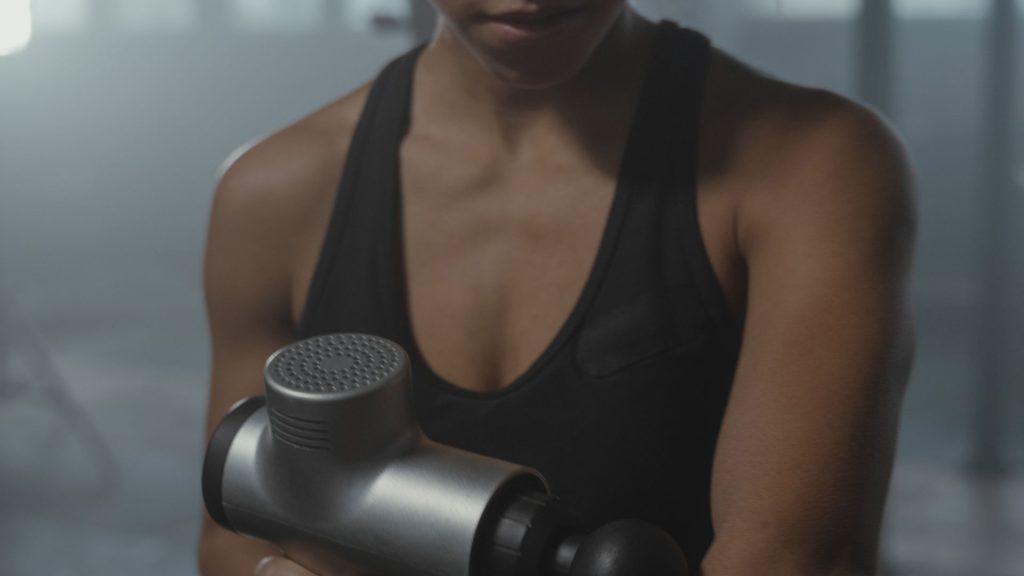
While foam rolling and percussive massage guns do not mechanically “break up scar tissue” or physically realign muscle fibers, they provide powerful neurological benefits. By applying mechanical pressure to cutaneous mechanoreceptors, foam rolling stimulates large-diameter A-beta sensory nerve fibers.
According to the Gate Control Theory of Pain, this input inhibits nociceptive transmission in the dorsal horn of the spinal cord, temporarily reducing perceived muscle soreness and improving passive range of motion without decreasing acute muscular force production.
8. Frequently Asked Questions
Is it safe to work out while still experiencing DOMS?
Yes, provided the soreness is moderate and does not alter your joint mechanics. A thorough dynamic warm-up typically increases blood flow and temporarily alleviates soreness. However, if soreness is severe and causes you to limp or alter your movement pattern, allow another 24 hours of recovery or train a different muscle group.
Why are my hamstrings and calves always more sore than other muscles?
Hamstrings and calves have a higher proportion of fast-twitch (Type II) muscle fibers, which are more susceptible to eccentric micro-damage. Furthermore, exercises like Romanian deadlifts subject the hamstrings to intense eccentric loading at long muscle lengths, maximizing sarcomere strain.
Does stretching after a workout prevent DOMS?
No. Multiple large-scale Cochrane systematic reviews have concluded that static stretching before, during, or after exercise produces zero statistically significant reduction in delayed onset muscle soreness.
What is the difference between DOMS and an acute muscle strain?
DOMS develops gradually 12 to 24 hours post-workout, feels like a diffuse muscular ache, and affects both sides of the body symmetrically. An acute muscle tear or strain occurs suddenly during a specific repetition, feels like a sharp localized pain, and is often accompanied by immediate swelling, bruising, or loss of joint function.
9. Summary and DOMS Mastery Checklist
Delayed Onset Muscle Soreness is a natural byproduct of novel eccentric tension and structural remodeling, not a metric of workout success. By understanding its physiology and tracking recovery, you build muscle sustainably without debilitating pain.
- Banish the myth that lactic acid causes muscle soreness; lactate clears within 60 minutes.
- Understand that DOMS is caused by eccentric micro-trauma, Z-line streaming, and inflammatory repair.
- Recognize that soreness naturally diminishes due to the Repeated Bout Effect as your body adapts.
- Avoid chasing extreme soreness, which suppresses force production and reduces weekly frequency.
- Utilize active recovery (light cardio) and slow-wave sleep to clear stiffness and accelerate repair.
- Avoid post-workout ice baths and high-dose NSAIDs, which blunt muscle hypertrophy.
- Monitor muscular readiness on your interactive muscle recovery map, log progressive sets in your workout tracker, and support repair via your macro tracker.