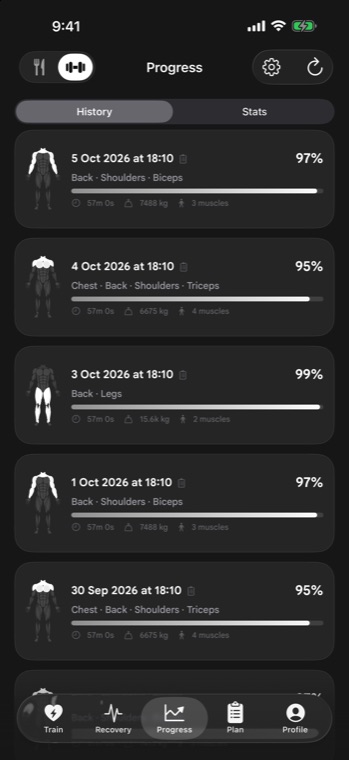
Every dedicated strength athlete inevitably encounters the dreaded plateau. During the beginner phase of resistance training, progression feels linear and effortless: you step into the gym, add five pounds to the barbell each week, and watch your lifts climb continuously. However, as your neuromuscular system approaches its genetic adaptation ceiling, linear progress grinds to an abrupt halt. You find yourself stuck at the exact same bench press, squat, or deadlift weight for months on end, repeatedly banging your head against the wall with the same sets and reps until frustration or overuse injuries force a regression. Breaking through an intermediate or advanced strength plateau requires abandoning simplistic linear models and deploying systematic, evidence-based diagnostic protocols.
In this comprehensive masterclass, we diagnose the physiological root causes of training stalls, analyze the bioenergetics of fatigue masking fitness, break down weak point biomechanics, explore wave loading and undulating periodization, and provide a concrete 4-phase protocol to shatter PR plateaus using an advanced workout tracker and companion smartwatch sensors.
1. The Fitness-Fatigue Paradigm: Why You Are Stronger Than You Think
To diagnose why your strength has stalled, you must first understand the fundamental theoretical model of modern sports science: Banister’s Fitness-Fatigue Paradigm (also known as the Two-Factor Theory of Training).
Whenever you execute a resistance training workout, that session produces two simultaneous physiological after-effects:
- Fitness (The Positive Adaptation): Long-lasting improvements in muscle fiber cross-sectional area, tendon stiffness, motor unit synchronization, and rate of force development (RFD). Fitness decays slowly over several weeks.
- Fatigue (The Negative Penalty): Short-term reductions in voluntary neural drive, metabolic substrate depletion (glycogen), peripheral muscle damage, and connective tissue inflammation. Fatigue decays much more rapidly than fitness, typically dissipating within 3 to 7 days.
Your Preparedness (your actual ability to express maximal strength on the barbell today) is the mathematical difference: Preparedness = Fitness – Fatigue. When lifters stall, they often assume they lack fitness and respond by adding more exercises, more sets, and more intensity. In reality, their fitness has expanded, but their accumulated systemic fatigue is so massive that it completely masks their true strength expression. In over 60% of gym plateaus, the solution is not working harder; it is systematically clearing fatigue through a structured deload to allow underlying fitness to supercompensate.
2. The Diagnostic Tree: Identifying the True Bottleneck
When a primary lift stalls, an athlete must execute a systematic diagnostic audit across four distinct physiological categories:
1. Neuromuscular Bottlenecks (Motor Unit Recruitment & RFD)
If you grind through warm-ups and fail to accelerate the barbell through the sticking point, your central nervous system may be failing to recruit high-threshold motor units rapidly. Training with velocity-based feedback via an Apple Watch or Wear OS smartwatch helps restore explosive concentric intent.
2. Structural Bottlenecks (Hypertrophy Deficits)
You cannot fire a cannon from a canoe. If your bench press is stalled at 100 kg and your pectoralis major and triceps brachii have not gained measurable cross-sectional area in a year, you do not have a programming problem; you have a muscular hypertrophy deficit. The prime movers lack the physical sarcomeres needed to generate greater contractile tension.
3. Biomechanical Sticking Points (Leverages & Weak Muscle Groups)
Barbell lifts do not fail uniformly; they fail at specific joint angles where external moment arms maximize mechanical disadvantage. Analyzing exactly where the lift fails reveals the weak link in the kinetic chain (e.g., failing at the chest on bench press indicates pectoral weakness or weak leg drive, while failing at lockout points to triceps or anterior deltoid insufficiency).
4. Substrate and Recovery Deficits
If you are attempting to add weight to your squat while under-eating carbohydrates or sleeping 5 hours a night, your biological operating system is running on empty. Without glycogen and slow-wave sleep tracked on your recovery tracker, tissue remodeling is physically impossible.
3. Stalling Diagnostics Matrix: Lift Weak Points and Corrective Exercises
The following table identifies the common biomechanical sticking points for the big three compound lifts and prescribes targeted accessory movements to eliminate the bottleneck:
| Exercise & Sticking Point | Primary Weak Muscle Group | Biomechanical Mechanism | Targeted Corrective Accessory Lifts |
|---|---|---|---|
| Bench Press: Off the Chest | Pectoralis Major & Lat Stability | Inadequate starting force; poor lat engagement | Spoto Press, 2-Second Paused Bench, Wide-Grip Bench |
| Bench Press: Mid-Way to Lockout | Triceps Brachii (Lateral/Medial Heads) | Failure of elbow extension under heavy shear load | Close-Grip Bench Press, Board Presses, JM Presses |
| Squat: Stalling in the Hole | Quadriceps & Gluteus Maximus | Insufficient knee extension force out of the turnaround | Paused Back Squats, Pin Squats, Bulgarian Split Squats |
| Squat: “Good Morning” Hip Rise | Quadriceps Weakness | Quads fail; hips shoot back to shift load to spinal erectors | Front Squats, Hack Squats, Leg Extensions |
| Deadlift: Breaking the Floor | Quadriceps & Lat Latency | Weak initial floor drive; failing to pull slack out of bar | Deficit Deadlifts, Paused Deadlifts (at shin), Trap Bar Deadlifts |
| Deadlift: Lockout at the Knees | Glutes, Hamstrings & Upper Back | Inability to extend hips forward; rounding thoracic spine | Block / Rack Pulls, Barbell Romanian Deadlifts, Heavy Barbell Rows |
4. Programming Solutions: Undulating Periodization and Wave Loading
When linear progression fails, advanced lifters must transition to non-linear programming paradigms that stimulate novel adaptations while preventing neural burnout.
Daily Undulating Periodization (DUP)
Instead of performing the same 3×5 protocol every session, DUP alters the intensity, volume, and rep bracket every single time you perform the movement within the week. For example:
- Monday (Hypertrophy Focus): 4 sets of 8 reps at 70% 1RM (governed at 2 RIR in your workout tracker).
- Wednesday (Power & Speed Focus): 5 sets of 3 reps at 62.5% 1RM (maximal explosive acceleration tracked via smartwatch sensors).
- Friday (Maximal Strength Focus): 3 sets of 4 reps at 82.5% 1RM (heavy mechanical tension).
By constantly shifting the physiological stimulus, DUP prevents the central nervous system from habituating to a static stimulus, driving consistent strength increases even in advanced athletes.
5. Step-by-Step Protocol: The 4-Phase Plateau Shattering Mesocycle
When you have been stuck at the same weight for more than three weeks, execute this 4-phase systematic intervention:
Phase 1: The Reactive Deload (Fatigue Dissipation Week)
Immediately drop your total working sets by 50% and reduce external load by 10% to 15%. If your normal workout comprises 16 working sets, perform only 8 sets, terminating every set at an easy 4 RIR. Use this week to prioritize sleep, hydrate thoroughly, and allow chronic connective tissue inflammation to resolve. Your accumulated fatigue will dissipate rapidly.
Phase 2: Volume Accumulation and Accessory Rebuilding (Weeks 2 to 4)
Return to training with fresh neural readiness. Re-introduce your primary compound lifts at 75% to 80% of your historic 1RM, using 2 to 3 RIR. Dedicate 40% of your workout volume to the targeted corrective accessory exercises identified in your diagnostic audit (such as Spoto presses or deficit deadlifts). Log all sets and reps diligently in your workout tracker.
Phase 3: Intensification and Velocity Governance (Weeks 5 & 6)
Increase external loads to 82.5% to 87.5% 1RM while reducing accessory volume. Utilize intuitive autoregulation to govern each set. If bar speed on your smartwatch indicates crisp acceleration, challenge the top end of your rep bracket. If bar velocity begins to drag, terminate the set before reaching form breakdown.
Phase 4: The Peak and New Personal Record (Week 7)
Following a two-day rest window with high-glycogen fueling, test your new strength baseline. With fatigue cleared, weak links strengthened, and neuromuscular firing primed, you will smash through your previous plateau with crisp, commanding technical execution.
6. Nutritional and Recovery Strategies to Shatter Stalls
Strength is fundamentally an energy-dependent process. If your body is in an unmonitored caloric deficit, attempting to break a heavy strength plateau is an uphill biological battle. Implement these nutritional levers via your macro tracker:
- A Tactical Caloric Surplus (+250 to +350 kcal): Consuming a minor surplus for four weeks increases intramuscular fluid retention, elevates cellular swelling, improves leverage around joint capsules, and fuels aggressive ATP resynthesis.
- Targeted Intra-Workout Carbohydrates: Consuming 30 to 45 grams of rapid-digesting carbohydrates (such as cyclic dextrin or maltodextrin) during heavy two-hour lifting sessions maintains blood glucose and prevents late-session central nervous system fatigue.
- Creatine Monohydrate Saturation: Ensure daily intake of 5 grams of creatine monohydrate to maximize intramuscular phosphocreatine stores, directly supporting explosive 1-to-5 rep strength.
7. Common Mistakes That Prolong Plateaus
Mistake 1: Testing Strength Instead of Building Strength
Many stalled lifters walk into the gym every week and attempt a maximal 1RM single. Maxing out does not build strength; it tests strength while generating massive systemic fatigue. Spend 90% of your training volume in the 70% to 85% zone accumulating clean, sub-maximal working sets.
Mistake 2: Changing All Exercises Simultaneously
When frustrated, athletes often scrap their entire program and jump to an unrelated routine. This resets your motor learning curve, making it impossible to measure whether your plateau was actually resolved. Keep your core compound movements stable and rotate only your auxiliary accessory lifts.
Mistake 3: Ignoring Sleep Debt
You cannot overcome a 10-hour weekly sleep debt with pre-workout caffeine. Chronic sleep deprivation depresses testosterone, elevates cortisol, and severely impairs motor unit firing rates. Audit your sleep architecture using a dedicated sleep tracker.
7b. Neuro-Muscular Potentiation and Post-Activation Potentiation (PAP)
An advanced technique utilized by elite powerlifters to shatter sticking points is Post-Activation Potentiation (PAP). Prior to performing your working sets (e.g., 4 sets of 5 at 80%), perform a single explosive repetition with 90% to 92% of your 1RM, terminating with 3 RIR.
This near-maximal load produces intense motor unit recruitment and phosphorylates regulatory light chains on skeletal myosin heads without inducing significant fatigue. When you subsequently strip the bar down to your working weight of 80%, the barbell feels noticeably lighter, and the nervous system discharges motor units with heightened frequency and velocity.
7c. Tendon Remodeling Kinetics and Connective Tissue Lag
A hidden physiological cause of persistent strength plateaus is connective tissue lag. Skeletal muscle tissue possesses a rich vascular capillary network, allowing contractile sarcomeres to remodel rapidly within 48 to 72 hours following resistance training. In stark contrast, dense connective tissues – such as the patellar, quadriceps, and distal triceps tendons – are largely avascular, relying on slow synovial fluid diffusion for nutrient delivery.
As a result, tendon stiffness and collagen cross-linking adapt at less than one-third the speed of muscular hypertrophy. When muscular force production outpaces tendon tensile capacity, Golgi tendon organs (GTOs) detect excessive strain on the myotendinous junction. In a protective spinal reflex, the GTO sends inhibitory feedback to alpha motor neurons, capping voluntary muscle activation to prevent tendon avulsion.
To overcome this protective inhibition, stalled lifters must incorporate heavy slow resistance (HSR) or isometric holds (such as 30-second isometric Spanish squats or paused bench presses). These modalities stimulate tenocyte synthesis of type I collagen without causing joint shearing, upgrading the tensile strength of the tendon and allowing your nervous system to safely unleash maximal muscular force.
8. Frequently Asked Questions
How long should I stay on a plateau before changing my program?
If you fail to progress in weight, repetitions, or velocity across three consecutive weeks despite adequate nutrition and sleep, you have reached a true plateau. Initiate the 4-phase diagnostic protocol immediately.
Can I break a strength plateau while cutting body fat?
Intermediate and advanced lifters rarely set major strength personal records during significant caloric deficits. Your primary goal during a cut is preserving existing strength. Focus on breaking major plateaus during maintenance or caloric surplus phases.
How do smartwatches help identify lifting plateaus?
By measuring mean concentric bar velocity on Apple Watch or Wear OS, your watch detects when velocity has plateaued before a complete failure occurs, providing an early warning sign to deload.
What role does grip strength play in deadlift stalls?
If your neural grip receptors detect bar slippage, your central nervous system reflexively inhibits spinal erector and glute force production (protective neural inhibition). Using lifting straps on heavy overload pulls eliminates this bottleneck.
9. Summary and Plateau Breaking Checklist
Plateaus are not permanent roadblocks; they are biological feedback signals indicating that fatigue has accumulated or that a specific kinetic link requires reinforcement. By diagnosing the root cause and deploying structured periodization, you shatter barriers and unlock continuous growth.
- Recognize that accumulated fatigue frequently masks expanding underlying fitness.
- Deploy a 1-week reactive deload (50% volume drop) to clear systemic fatigue.
- Diagnose your biomechanical sticking point and program targeted accessory exercises.
- Transition to Daily Undulating Periodization (DUP) to vary volume and intensity across the week.
- Ensure an energy-replete environment by logging a minor caloric surplus on your food tracker.
- Track sets, reps, and velocity in an intelligent workout tracker and monitor nervous system recovery with a sleep tracker.