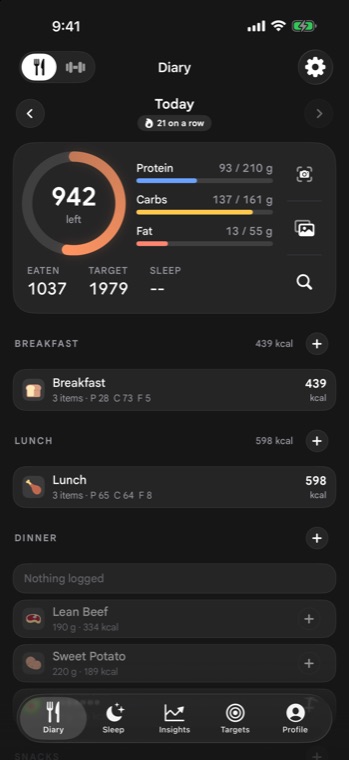
Among all nutritional variables in athletic performance, protein intake reigns supreme. It is the molecular substrate for contractile skeletal muscle remodeling, enzymatic repair, and systemic recovery following grueling bouts of resistance training. Yet despite thousands of peer-reviewed publications, the fitness landscape remains divided by dogmatic myths. On one side, antiquated bodybuilding dogmas claim you must consume 40 grams of whey protein every two hours to avoid immediate catabolism; on the other, minimalist influencers argue that protein timing is completely irrelevant and only total daily intake matters. Contemporary exercise science paints a far more nuanced, actionable picture. By optimizing daily intake, per-meal leucine thresholds, and distribution windows with an integrated food tracker, lifters can maximize myofibrillar protein synthesis (MPS) while eliminating unnecessary dietary stress.
In this scientific deep dive, we examine the molecular biology of the muscle protein synthetic cascade (mTORC1), define optimal daily protein thresholds (1.6 to 2.4 g/kg), analyze the “muscle-full” refractory period, compare protein bioavailability across food sources, and outline a daily distribution protocol to pair with your progressive lifting in your workout tracker.
1. The Molecular Cascade: mTORC1 and the Leucine Trigger
Skeletal muscle tissue exists in a perpetual dynamic equilibrium between Muscle Protein Synthesis (MPS) and Muscle Protein Breakdown (MPB). The net balance between these two continuous biological processes dictates whether muscle mass is gained, lost, or maintained. When you train heavy in the gym, mechanical tension initiates intracellular signaling that sensitizes muscle fibers to incoming amino acids, but the resistance training itself temporarily elevates both synthesis and breakdown.
To achieve net positive muscle protein accretion, systemic circulation must deliver the nine Essential Amino Acids (EAAs), with particular emphasis on the branched-chain amino acid L-leucine. Leucine acts as an allosteric activator of the mechanistic target of rapamycin complex 1 (mTORC1). Rather than acting merely as a building brick, leucine serves as the primary biochemical key that turns on the cellular machinery of translation initiation.
Decades of dose-response investigations demonstrate the existence of a “leucine threshold”: approximately 2.5 to 3.5 grams of free leucine per meal (typically provided by 25 to 40 grams of high-quality animal protein or 35 to 50 grams of plant-based protein). When intracellular leucine concentrations surpass this threshold, mTORC1 phosphorylates downstream effectors (p70S6K and 4E-BP1), initiating ribosome assembly and peptide chain elongation. Ingesting sub-threshold doses (such as 10 grams of protein containing only 0.8g of leucine) fails to robustly trigger mTORC1, resulting in suboptimal anabolic signaling.
2. Total Daily Protein: The 1.6 to 2.4 g/kg Hierarchy
While per-meal distribution is important, total daily protein intake remains the overarching foundation. In a landmark meta-analysis examining 49 studies and over 1,800 participants, Dr. Robert Morton and colleagues analyzed the relationship between protein supplementation and resistance training adaptations.
The findings were definitive: for individuals in caloric maintenance or surplus seeking maximal hypertrophy, the beneficial threshold plateaued at 1.62 grams per kilogram of body weight per day (0.73 g/lb). While consuming beyond this level did not accelerate muscle growth in energy-replete states, the confidence interval suggested that consuming up to 2.2 g/kg (1.0 g/lb) provided a statistical guarantee that individual genetic variations in digestion, absorption, and oxidation were fully covered.
However, during an energy deficit (fat loss cut), the protein requirement escalates significantly. In a caloric deficit, endogenous amino acids are increasingly diverted toward hepatic gluconeogenesis to maintain blood glucose levels. To shield contractile muscle tissue from catabolism and promote fullness, strength athletes should increase intake to 2.2 to 2.6 g/kg (1.0 to 1.2 g/lb), tracking every gram with a reliable food and macro tracker.
3. Protein Quality and Bioavailability Comparison Matrix
Not all proteins are created equal in their amino acid kinetics and digestive efficiency. The following table compares common protein sources across the Protein Digestibility-Corrected Amino Acid Score (PDCAAS), Digestible Indispensable Amino Acid Score (DIAAS), and typical leucine content:
| Protein Source | DIAAS / PDCAAS Score | Leucine Content per 100g Protein | Digestion Rate & Kinetics | Hypertrophic Utility |
|---|---|---|---|---|
| Whey Protein Isolate | 1.20 to 1.30 (Exceptional) | ~11.0 to 12.0g | Rapid (8-10g per hour); rapid plasma amino acid spike | Gold standard for rapid post-workout leucine triggering |
| Whole Eggs & Egg Whites | 1.15 to 1.20 (Exceptional) | ~8.5 to 9.0g | Moderate; egg lipid matrix enhances muscle uptake | Exceptional whole food source; high micronutrient density |
| Chicken Breast / Turkey | 1.08 to 1.15 (High) | ~8.0 to 8.5g | Moderate to Slow; sustained amino acid release | Core dietary staple for lean, high-protein meal templates |
| Lean Beef / Steak | 1.10 to 1.15 (High) | ~8.0 to 8.5g | Slow; provides dietary creatine, iron, and zinc | Excellent for strength athletes needing dense micronutrients |
| Micellar Casein | 1.10 to 1.15 (High) | ~9.0 to 9.5g | Very Slow (clots in stomach); sustained release over 6-8h | Ideal pre-sleep protein to suppress nocturnal MPB |
| Soy Protein Isolate | 0.98 to 1.00 (Moderate) | ~7.5 to 8.0g | Moderate to Rapid; lower methionine than whey | High-quality complete plant-based alternative |
| Pea & Rice Protein Blend | 0.90 to 0.95 (Moderate) | ~7.0 to 7.8g | Moderate; complementary amino acid profiles | Effective plant blend overcoming individual deficiencies |
4. Protein Timing and the “Muscle-Full” Refractory Period
One of the most profound discoveries in protein metabolism over the last two decades is the “muscle-full” effect, identified in research by Dr. Philip Atherton and Dr. Oliver Witard. When a lifter consumes a high-protein meal containing sufficient leucine, MPS spikes dramatically, peaking between 90 and 120 minutes post-ingestion before returning to baseline within three to four hours.
Crucially, even if plasma amino acid and leucine levels remain artificially elevated in the bloodstream, muscle protein synthesis remains refractory and cannot be re-stimulated immediately. Flooding your digestive system with protein every 60 to 90 minutes is physiologically redundant; the intracellular ribosomal machinery requires a biological reset window before it can launch another robust wave of synthesis.
Therefore, the optimal distribution strategy is consuming 3 to 5 evenly spaced protein meals per day, spaced roughly 3.5 to 5 hours apart. Each meal should contain 0.40 to 0.55 grams of protein per kilogram of body weight (typically 30 to 50 grams for most adults), ensuring that each feeding independently crosses the leucine threshold and triggers a maximal spike of MPS throughout the 24-hour cycle.
5. The Anabolic Window: Myth vs. Biological Reality
For decades, fitness magazines warned that lifters had a strict “30-minute anabolic window” following a workout. If you failed to chug a protein shake within 30 minutes of re-racking your final set, your workout was allegedly wasted. Modern exercise physiology reveals that while post-workout nutrition is important, the window of anabolic sensitivity is significantly wider than previously claimed.
When you perform high-intensity resistance training in your workout tracker, skeletal muscle remains sensitized to amino acids for at least 24 to 48 hours post-workout. If you consumed a pre-workout meal containing 35 to 45 grams of protein two hours before your session, that meal is still undergoing digestion and delivering amino acids to systemic circulation while you train. In this scenario, your immediate post-workout urgency is low.
However, if you train in a fasted state first thing in the morning, muscle protein breakdown is elevated. In that specific context, consuming a high-protein meal or shake containing 30 to 40 grams of fast-digesting protein within 60 minutes of concluding your session is genuinely advantageous for arresting catabolism and initiating repair.
6. Step-by-Step Protocol: Structuring Your Daily Protein Distribution
To transform these biochemical principles into a seamless daily routine, follow this 4-phase feeding structure:
Phase 1: Morning Ingestion (Breaking the Nocturnal Fast)
Upon waking, your body has experienced 8 to 10 hours of fasting, during which muscle protein breakdown exceeded synthesis. Consume 35 to 45 grams of high-quality protein (such as whole eggs and egg whites with oatmeal, or a whey protein smoothie) to cross the leucine threshold and transition your system into a net anabolic state.
Phase 2: Pre-Workout Fueling (2 to 3 Hours Prior)
Consume a balanced whole food meal comprising 35 to 45 grams of lean protein (chicken, turkey, or fish) alongside complex carbohydrates (rice, potatoes, or oats). This provides circulating amino acids during your workout while supplying glycogen to fuel explosive bar speed on your smartwatch sensors (Apple Watch or Wear OS).
Phase 3: Post-Workout Anabolic Consolidation (Within 2 Hours)
Following your workout, consume another 35 to 45 grams of protein paired with moderate carbohydrates to replenish depleted muscle glycogen and stimulate mTORC1. A whey protein shake or solid meal of lean meat and starches fits this window perfectly.
Phase 4: Nocturnal Sustained-Release Feeding (Pre-Bed)
To bridge the overnight fast and facilitate nocturnal tissue repair during deep slow-wave sleep, consume 35 to 50 grams of slow-digesting protein (such as Greek yogurt, cottage cheese, or micellar casein) 60 to 90 minutes before bed. This provides a steady, sustained trickle of amino acids throughout the night, suppressing muscle protein breakdown and maximizing growth hormone synergy tracked via your sleep tracker.
7. Common Protein Myths and Practical Errors
Error 1: Believing the Body Can Only Absorb 30 Grams per Meal
A persistent fitness myth claims that consuming more than 30 grams of protein in a single meal is wasted. This misunderstands human digestion. While 30 to 40 grams of protein may saturate the acute MPS signaling response, larger protein doses are still 100% digested and absorbed. The excess amino acids are utilized for systemic protein turnover, visceral organ repair, neurotransmitter synthesis, or oxidized for energy.
Error 2: Neglecting Plant Protein Leucine Content
Plant-based proteins (such as beans, lentils, and grains) generally possess lower concentrations of leucine and methionine compared to animal sources. Plant-based athletes must consume slightly larger per-meal doses (40 to 50 grams per feeding) or combine complementary sources (such as pea and rice protein) to ensure they achieve the 3-gram leucine threshold.
Error 3: Forgetting to Track Protein via Verified Databases
Relying on mental math or unverified crowdsourced database entries frequently leads to under-eating protein by 20% to 30%. Using an automated food tracker with high-speed barcode scanning and label OCR ensures every gram logged represents verified nutritional reality.
7b. Free-Form BCAAs and EAAs: Science vs. Marketing Hype
The sports supplement industry has aggressively marketed Branched-Chain Amino Acids (BCAAs: leucine, isoleucine, and valine) as mandatory intra-workout muscle builders. However, rigorous metabolic tracer research by Dr. Robert Wolfe has demonstrated that consuming isolated BCAAs without the remaining six Essential Amino Acids actually decreases myofibrillar protein synthesis and impairs muscular recovery.
Muscle protein synthesis requires the complete orchestra of all nine EAAs. Ingesting isolated leucine or BCAAs is akin to turning the ignition key in a car that has an empty fuel tank: the cellular signal (mTORC1) is activated, but the necessary structural substrates are missing, forcing the body to break down existing muscle tissue to supply the missing amino acids. If your total daily protein intake from whole foods and complete protein supplements is dialed in on your macro tracker, free-form BCAA powders provide zero additional benefit.
8. Frequently Asked Questions
Can consuming too much protein damage healthy kidneys?
No. Extensive clinical trials examining protein intakes up to 3.3 grams per kilogram of body weight in resistance-trained individuals have demonstrated zero adverse effects on renal function, glomerular filtration rate, or hepatic health in individuals with healthy kidneys.
Is whey protein powder necessary, or can I rely purely on whole foods?
Whey protein is simply a convenient, highly bioavailable food derived from milk. It is not chemically mandatory; you can achieve identical muscular adaptations using whole foods (chicken, beef, eggs, fish, dairy) provided your total daily protein and leucine thresholds are met.
How does protein intake interact with progressive overload?
Progressive overload in your workout tracker provides the mechanical signal to adapt, while dietary protein provides the physical building blocks. Without adequate protein, progressive overload stalls as the body cannot structurally repair micro-trauma in muscle sarcomeres.
Does collagen protein count toward my daily protein target?
Collagen is rich in glycine, proline, and hydroxyproline, which support tendon and joint health, but it contains zero tryptophan and negligible leucine. Therefore, collagen should not be counted toward your primary muscle-building protein target; treat it as an auxiliary connective tissue supplement.
9. Summary and Protein Mastery Checklist
Optimizing protein intake is the most reliable nutritional lever for accelerating muscle growth and speeding recovery. By hitting daily targets and spacing high-leucine feedings evenly, you provide your body with the exact building blocks required for peak performance.
- Target 1.6 to 2.2 g/kg daily protein in maintenance or surplus, and 2.2 to 2.6 g/kg during a fat loss cut.
- Ensure each meal contains 2.5 to 3.5 grams of leucine to reliably activate mTORC1.
- Distribute protein across 3 to 5 feedings spaced 3.5 to 5 hours apart to respect the muscle-full refractory period.
- Combine fast-digesting proteins post-workout with slow-digesting casein or Greek yogurt before sleep.
- Log all meals using an accurate barcode-enabled food tracker, sustain progressive overload in your workout tracker, and monitor systemic recovery via a sleep tracker.