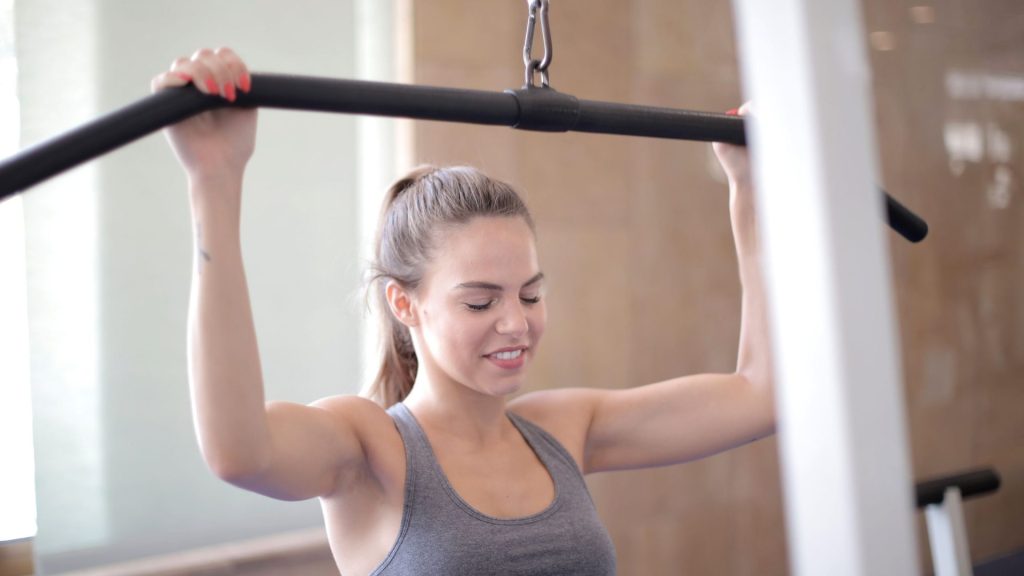
A gym split 4 days a week is one of the most practical ways to train. Four sessions give you enough frequency to hit every muscle at least twice, enough recovery days to keep performance high, and enough flexibility to fit around work, family and life. But “4 day split” can mean several different setups, and the right one depends on your goals, experience and schedule. This guide compares the main options, gives you sample workouts you can run, and shows how to progress and track them over time.
Why Four Days a Week Works So Well
Four days sits between the simplicity of three full body sessions and the higher demands of five or six day programs.
Enough Frequency
Training each muscle about twice per week is a common recommendation for growth and strength, because it lets you split your weekly volume into higher quality sessions. Four days makes twice-a-week frequency easy without making any one session too long.
Enough Recovery
With three rest days, you can recover between hard sessions, which matters more as the weights get heavier. Sleep and recovery set the ceiling on how much training pays off, as covered in muscle recovery and sleep tracking for lifters.
Easy to Schedule
Monday, Tuesday, Thursday and Friday is the classic layout, with Wednesday and the weekend off. But four days also fits other patterns, such as two on, one off, two on, two off.
Option 1: Upper Lower Split
The upper lower split is the most popular 4 day setup, and for good reason. You alternate upper body and lower body days, training each twice per week.
Weekly Layout
- Day 1: Upper A (strength focus)
- Day 2: Lower A (strength focus)
- Day 3: Rest
- Day 4: Upper B (hypertrophy focus)
- Day 5: Lower B (hypertrophy focus)
- Days 6 and 7: Rest
Sample Upper A
- Bench press: 4 sets of 5 to 6 reps
- Barbell row: 4 sets of 6 to 8 reps
- Overhead press: 3 sets of 6 to 8 reps
- Lat pulldown or pull-up: 3 sets of 8 to 10 reps
- Biceps curl: 2 to 3 sets of 10 to 12 reps
- Triceps pushdown: 2 to 3 sets of 10 to 12 reps
Sample Lower A
- Back squat: 4 sets of 5 to 6 reps
- Romanian deadlift: 3 sets of 6 to 8 reps
- Leg press: 3 sets of 8 to 10 reps
- Leg curl: 3 sets of 10 to 12 reps
- Standing calf raise: 3 sets of 10 to 15 reps
Sample Upper B
- Incline dumbbell press: 3 to 4 sets of 8 to 12 reps
- Chest supported row: 3 to 4 sets of 8 to 12 reps
- Seated dumbbell shoulder press: 3 sets of 10 to 12 reps
- Cable row or one-arm row: 3 sets of 10 to 12 reps
- Lateral raise: 3 sets of 12 to 15 reps
- Incline curl and overhead triceps extension: 2 to 3 sets each
Sample Lower B
- Deadlift or trap bar deadlift: 3 sets of 4 to 6 reps
- Front squat or hack squat: 3 sets of 8 to 10 reps
- Walking lunge or split squat: 3 sets of 10 to 12 per leg
- Leg extension: 3 sets of 12 to 15 reps
- Seated calf raise: 3 sets of 12 to 15 reps
Who It Suits
Upper lower is a strong default for beginners moving beyond full body training and for intermediates who want a balance of strength and size.
Option 2: Full Body Four Times a Week
Full body training is not only for three day programs. Four shorter full body sessions can work well, especially if you prefer shorter workouts.
How It Works
Each session includes a lower body exercise, an upper push and an upper pull, plus one or two accessories. You rotate exercises across the week so each day feels different, for example squats on Day 1, deadlifts on Day 2, front squats on Day 3 and lunges on Day 4.
Who It Suits
Busy lifters who want sessions under an hour, and people who enjoy practising the main lifts frequently. The downside is that heavy lower body work four times a week can be tiring, so many people alternate heavy and light days.
Option 3: Push, Pull, Legs Plus One
If you like the structure of push, pull, legs but only have four days, you can run it with a fourth day that rotates or targets a weak point.
Two Ways to Set It Up
- Rotating: Push, Pull, Legs, Push, then Pull, Legs, Push, Pull, and so on. Each muscle gets trained a little less than twice per week on average.
- Fixed fourth day: Push, Pull, Legs, plus an upper body or arms and shoulders day.
For a full breakdown of the classic version, see our push, pull, legs programming guide.
Who It Suits
Lifters who enjoy PPL and want to keep its structure on a four day schedule, or who want extra work for a lagging body part.
Option 4: Body Part Pairings
Some lifters prefer pairing muscle groups, for example chest and back, legs, shoulders and arms, and a second legs or full body day.
Pros and Cons
Pairings allow high volume per muscle in a session and can feel more focused. The trade-off is that some muscles are only trained hard once per week. If you choose this route, make sure your weekly sets per muscle still add up to a productive range.
How to Choose the Right 4 Day Split
Ask yourself four questions.
What Is Your Main Goal?
For general strength and size, upper lower is hard to beat. For maximising time efficiency, full body works well. For a focus on a specific muscle group, a hybrid or pairing split gives you more room.
How Much Time Do You Have per Session?
Upper lower sessions often run 60 to 75 minutes. Full body sessions can be shorter. Pairings and PPL sessions vary.
How Do You Recover?
If heavy squats and deadlifts leave you wrecked for days, avoid splits that load them too often.
What Will You Stick To?
The best split is the one you will follow consistently for months. Choose the one you enjoy enough to repeat.
Weekly Volume on a 4 Day Split
Your split determines how your weekly sets are distributed. Most people who train for muscle growth land somewhere around 10 to 20 hard sets per muscle per week, starting lower when newer to training. In an upper lower split, that usually means 5 to 8 sets per muscle per session. For a full explanation of how to count and adjust sets, read how many sets per muscle group per week.
Balancing Push and Pull
Keep pushing and pulling volume roughly balanced across the week. Many lifters drift toward more pressing than rowing, which can leave the upper back undertrained.
Warming Up on a 4 Day Split
A good warm-up makes heavy sets safer and usually better. It does not need to be long.
A Simple Routine
- Five minutes of easy cardio, such as cycling or brisk walking.
- A few dynamic movements for the joints you are about to train, such as leg swings and hip circles on lower days or band pull-aparts and arm circles on upper days.
- Two to four ramp-up sets on the first main lift, starting light and building toward your working weight.
Later exercises in the session usually need only one lighter set, because the muscles are already warm. Log warm-up sets as warm ups, not working sets, so they do not inflate your volume numbers.
How to Progress a 4 Day Split
A split only works if the training gets progressively harder over time.
Double Progression
Pick a rep range, such as 8 to 12. When you hit the top of the range on all sets with good form, increase the weight and start again at the bottom. It is simple and works for most exercises.
Heavy and Light Days
In an upper lower split, Day A can focus on heavier, lower rep work and Day B on moderate weights and higher reps. Progress each day on its own terms.
Planned Deloads
After several weeks of hard training, a lighter week helps you recover and come back stronger. See how to structure a deload week.
Effort Matters
Most working sets should finish with a few reps in reserve or less. If you are unsure, our guide to reps in reserve explains how to judge it.
Tracking Your 4 Day Split With IMPOLS
Writing down weights and reps for four sessions a week adds up quickly. The IMPOLS workout tracker lets you build a weekly workout plan, so each day of your split is ready when you walk into the gym.
Useful Features for a 4 Day Split
- Smart starting weights. IMPOLS suggests weights based on your history, so you are not guessing where to start.
- Set types. Log warm up, working, drop and failure sets separately, so your working volume stays accurate.
- Personal records. IMPOLS tracks your PRs, so you can see when double progression is paying off.
- Plate breakdown. It shows which plates to load for a given barbell weight.
- Weekly volume by muscle. See where your sets are going and whether your split is balanced.
- Recovery body map. After each session, see which muscles are fresh and which need more rest.
If you train with an Apple Watch or Wear OS watch, you can log from your wrist, and IMPOLS Premium adds Intuitive training, which reads each set and scores how close to failure you got.
Common Mistakes on a 4 Day Split
Stacking Hard Lower Days Back to Back
Heavy squats one day and heavy deadlifts the next can be too much for many lifters. Spread the hardest lower body work across the week.
Too Many Exercises per Session
Six to seven well chosen exercises is plenty. Adding more often means lower quality on the ones that matter.
Program Hopping
Switching splits every two weeks makes it impossible to tell what works. Run a split for at least eight to twelve weeks before judging it.
Skipping Lower Body Days
If you consistently skip the lower days, the split falls apart. Schedule them first, not last.
Ignoring Nutrition
Training hard four days a week needs fuel. Adequate protein and overall calories support recovery and progress. See how to track macros for fat loss and muscle gain.
Adjusting Your Split Around Real Life
Even the best plan meets busy weeks, travel and the occasional bad night of sleep. A flexible approach keeps you consistent without abandoning the program.
If You Miss a Day
Do not try to cram two sessions into one. Simply pick up with the next workout in the sequence. On an upper lower split, the order matters more than the exact weekday.
If You Only Have Three Days This Week
Run the first three sessions and continue the rotation next week, or switch to three full body sessions for that week by combining the main lifts from each day.
If You Feel Run Down
Keep the session but reduce the number of sets or leave a few more reps in reserve. A lighter session still maintains the habit and your progress, and you can push harder when you feel recovered.
Frequently Asked Questions
What is the best gym split for 4 days a week?
For most people, an upper lower split is the best default. It trains every muscle twice per week, balances strength and hypertrophy work, and is easy to schedule.
Is a 4 day split good for beginners?
Yes, especially an upper lower split. Beginners can also start with three full body days and move to four days when they want more volume or shorter sessions.
Which days should I train on a 4 day split?
A common layout is Monday, Tuesday, Thursday and Friday. Any pattern works as long as hard sessions for the same muscles are not on consecutive days too often.
How long should a 4 day split workout take?
Most sessions take about 45 to 75 minutes depending on the split, the number of exercises and rest times.
Can I build muscle training 4 days a week?
Yes. Four days gives enough frequency and volume for most people to build muscle, as long as training is progressive and recovery is solid.
Should I do cardio on a 4 day split?
You can. Many lifters add light cardio on rest days or after lifting. Keep hard cardio away from heavy leg days if it affects your performance.
Pick a Split and Run It
A gym split 4 days a week gives you a balance of frequency, volume and recovery that suits most lifters. Choose the setup that fits your goals and schedule, run it consistently, and progress it step by step. To plan each day, log your sets and see your progress in one place, download IMPOLS and set up your 4 day split today.